 LXD Guild
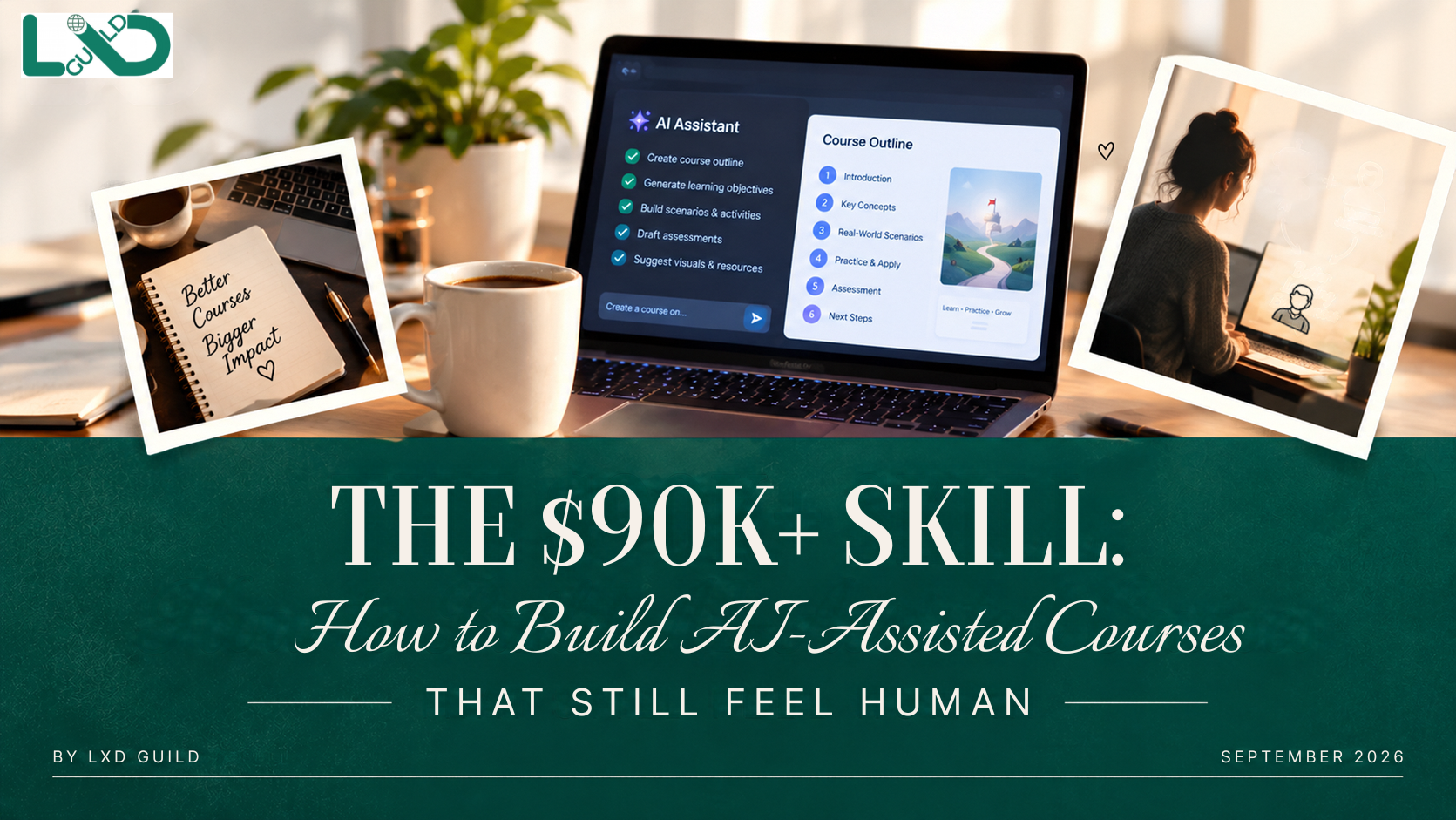
AI is changing how Instructional Designers and Learning Experience Designers build courses. It can create outlines, scenarios, assessments, scripts, and activities in minutes.
But there’s a problem:
AI can create a course. It can’t automatically make it feel human.
And that’s where the real LXD skill comes in.
Why This Skill Matters?
Learning Experience Design is becoming a valuable career skill. U.S. salary data currently puts Learning Experience Designer pay around $90K per year on average, with compensation varying by experience, location, and employer.
The opportunity isn’t just knowing AI. It’s combining:
AI + Instructional Design + UX + Human-Centered Learning
1. Start With the Learner
Don’t ask AI:
“Create a leadership course.”
First define:
- Who are the learners?
- What do they already know?
- What problem are they facing?
- What should they be able to do?
Better context = better AI-generated learning content.
2. Use AI as Your Assistant
AI can help with:
- Course outlines
- Learning objectives
- Scenarios
- Assessments
- Activities
- Learning paths
Tools like ChatGPT can speed up AI-assisted instructional design.
But always use:
AI generates → Designer reviews → Designer humanizes → SME validates
3. Make It Feel Real
Avoid generic examples like:
“Imagine you’re a manager dealing with a difficult employee.”
Instead, create realistic workplace situations where learners have to make decisions, solve problems, and see consequences.
Use:
- Scenarios
- Simulations
- Branching activities
- Reflection
- Real-world challenges
Articulate 360 can help turn content into interactive eLearning experiences.
4. Add the Human Layer
AI provides speed.
Humans provide:
- Context
- Empathy
- Creativity
- SME expertise
- Real workplace examples
- Instructional judgment
Before publishing, ask:
“Would a real instructor actually say this?”
If not, rewrite it.
The Human-in-the-Loop Workflow
Understand → Design → Prompt → Generate → Humanize → Interact → Validate → Improve
The goal isn’t to hide AI.
It’s to use AI to reduce repetitive work while giving Learning Experience Designers more time to create meaningful learning experiences.
AI can help you build the course faster. Human-centered design makes the course worth taking.
Explore LXD Guild
Want to learn more about Learning Experience Design, Instructional Design, eLearning, and L&D?
Looking for tools and resources for learning professionals?
Build smarter. Design better. Keep learning human.